

Task Force on Latinx People Experiencing Homelessness Report
Overview
The Los Angeles County Board of Supervisors adopted the motion “Immediate Action for the Growing Number of Latinos Experiencing Homelessness,” directing the Chief Executive Office (CEO) Anti-Racism, Diversity, and Inclusion (ARDI) Initiative to work with the Los Angeles Homeless Services Authority (LAHSA) to assess gaps in Los Angeles County’s (County) social service system that contribute to the rising number of Latinx People Experiencing Homelessness (LPEH).
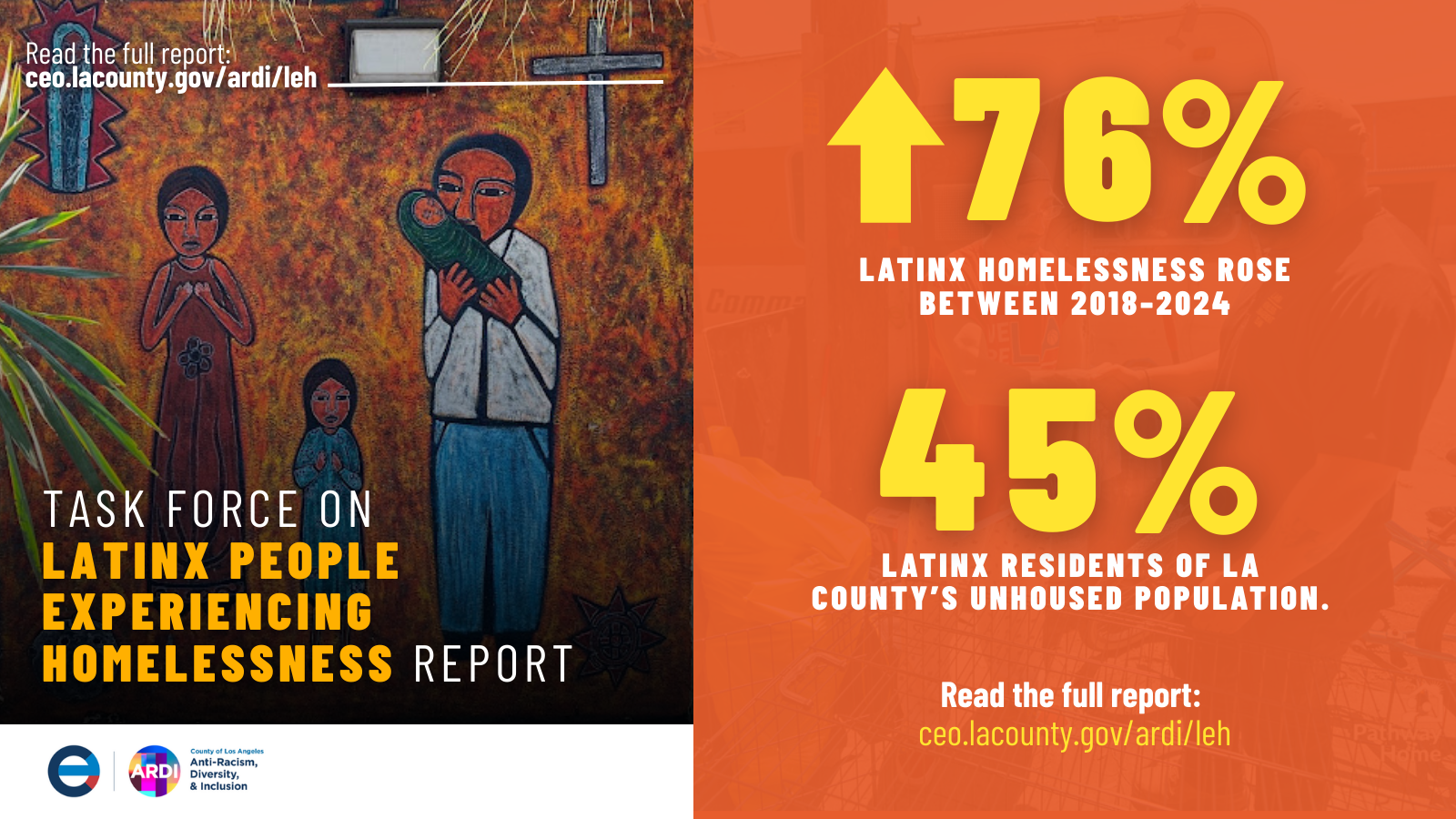
Between 2018 and 2024, the number of Latinx people experiencing homelessness in Los Angeles County increased by 76 percent, and Latinx residents now represent roughly 45 percent of the County’s homeless population. Despite this disproportionate impact, Latinx residents are significantly less likely to access and receive County services. This growing disparity prompted the Board to call for comprehensive analysis, deeper community engagement, and cross-sector collaboration to understand the drivers of Latinx homelessness and identify actionable solutions.
About the Report
The Task Force on Latinx People Experiencing Homelessness Report fulfills the mandate of the Board’s 2022 motion and reflects more than two years of research, community engagement, and departmental collaboration led by ARDI.
The report draws on:
- A cross-sector Task Force of 30 members, including community leaders, researchers, CBOs, LAHSA, and County partners
- More than 800 community feedback data points collected through district-based sounding board sessions, listening sessions, and surveys
- District-level assessments of service gaps, barriers, and lived experiences
- Analysis of structural drivers such as housing affordability, limited service accessibility, language barriers, wage theft, and immigration-related fears
- Recommendations guided by a targeted universalism framework
The resulting report provides one of the most comprehensive examinations to date of how structural inequities, administrative barriers, and community-specific challenges shape the experiences of Latinx residents navigating housing instability in Los Angeles County.
Key Findings
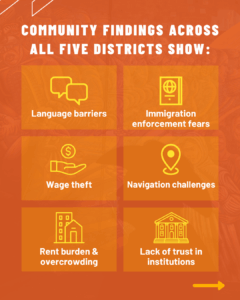
Across all five Supervisorial Districts, residents and service providers identified consistent systemic barriers, including:
- Limited language access and insufficient bilingual staffing
- Lack of culturally responsive outreach and service delivery
- Fear of engaging with County systems due to immigration concerns
- Wage theft and economic exploitation are affecting housing stability
- Complex and difficult-to-navigate County service systems
- Insufficient affordable housing and escalating rent burdens
These themes, captured through qualitative and quantitative community input, reveal a multi-layered set of challenges that intensify risk factors for Latinx families and individuals experiencing homelessness.
Recommendations
The report presents a framework of recommendations intended to strengthen prevention efforts, improve cultural responsiveness, and expand access to County services. Highlights include:
- Expanding language access and cultural competence across County departments
- Strengthening trusted partnerships with local community-based organizations
- Improving data transparency, including more accurate tracking of hidden homelessness, such as doubling up
- Developing targeted prevention and financial stability strategies
- Enhancing coordination across County departments, service providers, and safety-net programs
These recommendations align with ongoing County efforts to improve equity across homelessness prevention, housing, health, and safety-net systems.
Next Steps
As outlined in the Board memo submitted on December 1, 2025, ARDI will continue working with County departments, LAHSA, and community partners to identify near- and long-term strategies to advance the report’s recommendations. Several actions can begin using existing resources, while others will require deeper evaluation, expanded capacity, or Board direction.
The release of this report marks a significant step in ensuring Latinx residents — including families, youth, older adults, and mixed-status households — can access services that are culturally responsive, effective, and grounded in community insight.
Download the Report
