
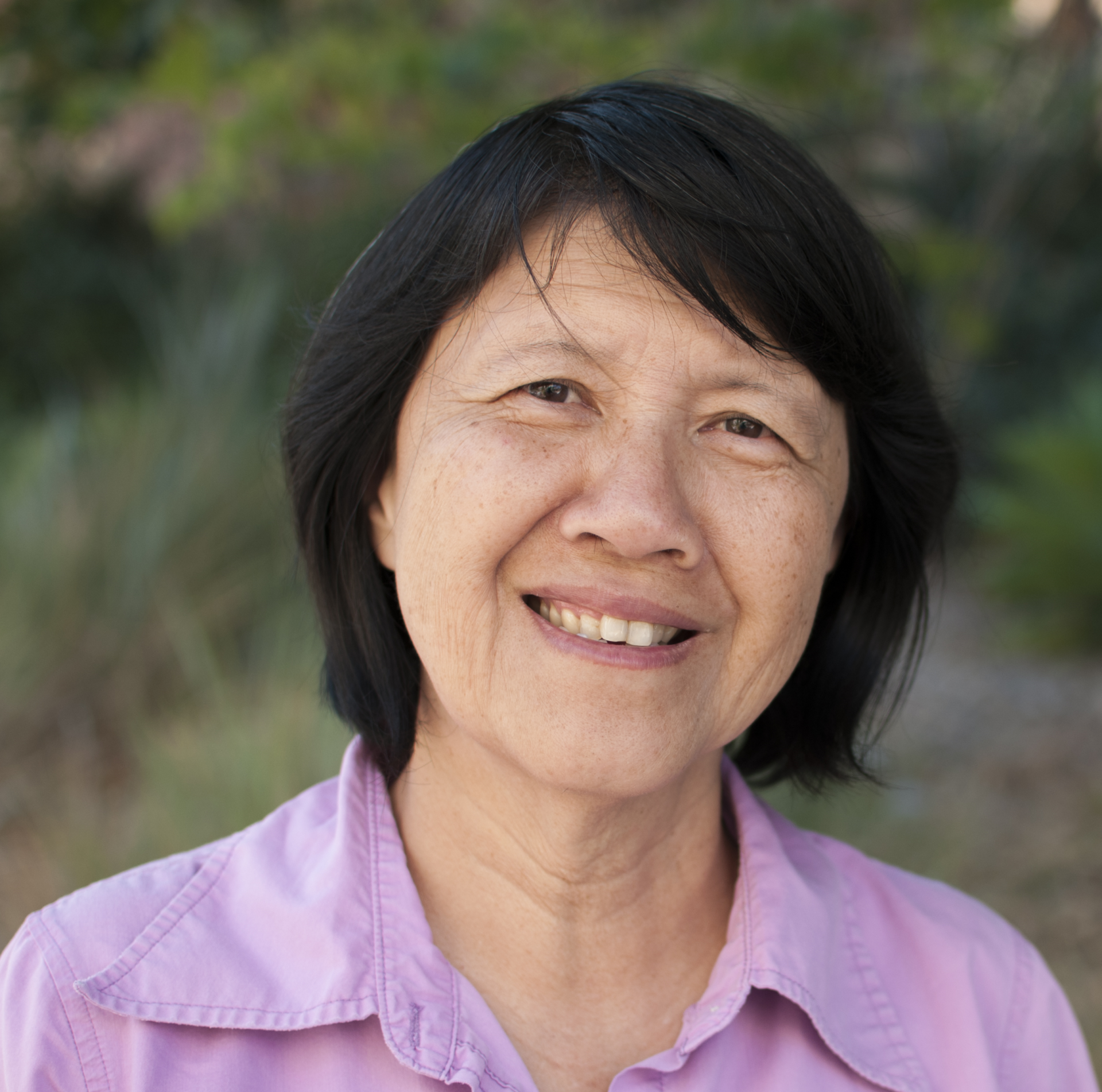
Science has been slow to truly engage communities in research about food insecurity, says UCLA’s Dr. May Wang. But that’s changing.
Dr. May Wang, a professor of Community Health Sciences at the UCLA Fielding School of Public Health, is helping the Food Equity Roundtable identify 12 communities most vulnerable to food and nutrition insecurity, from the disabled to older residents.
Dr. Wang sits on the Roundtable’s technical committee, advising more than two dozen leaders from government, philanthropy and community groups as they devise a strategic plan for fundamentally rethinking our food system. Armed with data from Dr. Wang and other leaders from the greater L.A. academic community, the Roundtable will issue its blueprint in September — presenting detailed action plans for building a more equitable food system for our most at-risk residents.
Here Dr. Wang shares her insights on some of the paradoxical challenges facing the poor and food insecure. She also offers an interesting take on how the pandemic may have actually helped accelerate greater collaboration among the scientific community and community groups as they work to solve the vexing problem of food insecurity
L.A. County is struggling with food insecurity among its most vulnerable populations. But at the same time, it is struggling with obesity in those same populations. To the layperson, that may seem strange. How are those two challenges related?
Research studies have shown a link between food insecurity and obesity in the United States. It is important to note that this relationship may not hold in other countries where the food environment is different. At least two mechanisms have been proposed to explain this relationship:
One has to do with the relative accessibility of unhealthy foods compared to healthy foods in low-income communities. In general, unhealthy foods are mostly processed (including ultra-processed) foods that are typically high in salt, fat and sugar, which enhance the flavors of food that is not fresh. Eating a diet consisting of mostly unhealthy foods is a cause of obesity. In LA County and many other parts of the United States, fresh produce and other healthy foods are less accessible (i.e. less affordable and less available) than unhealthy foods in lower income communities (see Kern, 2017, and Gosliner, 2018).
The other mechanism is a physiological one that has been referred to as the ‘Resource Scarcity Hypothesis” (Dhurandhar, 2016). Simply, this states that when food security is threatened especially in people experiencing economic hardships, fattening occurs as the body responds to this threat through stress-related mechanisms that involve how energy is metabolized.
Tell us about your work to study the root causes of childhood obesity. What have you learned that may lead to improved nutritional outcomes in marginalized communities?
Much of my work on childhood obesity has been guided by adaptations of McLeroy’s socio-ecological model, which simply states that behavior is influenced by several levels of influence: individual, interpersonal, organizations, community and policy. I have focused mostly on the upstream levels of influences – policy and community.
In my earlier work on neighborhood environments conducted about two decades ago, funded by the American Heart Association, we found that socioeconomic and retail food environmental characteristics of neighborhoods were associated with obesity risk in adults (Wang, 2007). Soon after I came to UCLA in 2008, we received another grant from the American Heart Association to examine the role of neighborhood food environments in childhood obesity risk using a unique database maintained by LA-based PHFE WIC. We found that the relationship between the neighborhood food environment and childhood obesity is a little more complex; essentially, it is not a linear relationship and we suggested that other factors, for example programs and policies, may also be important.
We received a NIH grant in 2013 to study how programs and policies interact with the neighborhood food environment to affect childhood obesity in WIC-participating children. This was a collaboration among UCLA, PHFE-WIC, the LA County Public Health Department, LA First Five, Kaiser Permanente and other groups. In this study, we attempted to use systems science and causal inference methods to help us identify intervention strategies effective in addressing childhood obesity under varying socioeconomic contexts. Essentially, we found that having interventions are effective only when they target different levels of influence (family, community and policy).
You also work to understand nutritional insecurity among older adults in Los Angeles County, especially in Asian communities. What are some of the special challenges that older people face, in general, and then as Asian Americans or immigrants, specifically?
I started to do work in this population 2020 when I realized that Asian American seniors are a group that has been overlooked in studies of food insecurity. We have since analyzed data from the California Health Interview Survey and learned that food insecurity rates among AA seniors were increasing even before the pandemic. Based on work that Loan Kim at Pepperdine has done with Scott Chan of the L.A. County Department of Public Health, and interviews I have had with community-based organizations, we identified some of the barriers to addressing food insecurity among AA seniors. These include:
feeling shame in receiving assistance from a government welfare program like CalFresh; not being aware of CalFresh or how to apply for it; unpleasant interactions with staff from government agencies that administer CalFresh; the lack of accurately and culturally appropriate translated materials; and fear of going outside the home during the pandemic.
A lot of your work focuses on trying to gauge and quantify the concept of intersectionality when it comes to food insecurity. A multi-modal and multi-disciplinary approach is needed to tackle all these interrelated challenges and come up with solutions. How do you approach that as a scientist? It sounds like a headache!
For me, the key to doing multidisciplinary work is to build/have trust among members so that we can communicate openly and honestly. This means learning to listen actively and ask questions rather than judge too quickly from our respective disciplinary paradigms of inquiry.
We recently applied for a training grant from the National Institutes of Health to provide foundational knowledge in qualitative and community-engaged methods to quantitative science students, and vice versa. Our goal is to help promote communication between academic groups of public health students who do not usually have opportunities to interact with each other. The training program is designed to provide this foundational knowledge and learning opportunities for the trainees to learn to communicate and work effectively with each other and identify and appreciate their common goals.
You’ve been involved in this work for decades. Are you more optimistic or less optimistic than when you started about finally coming up with some regional solutions to our food insecurity issues?
I am more optimistic! The pandemic, I think, has brought academic-government-community groups together (through many Zoom meetings) with the common goal of addressing urgent COVID-related issues. I am hopeful that this will help more scientists appreciate the value of involving community stakeholders in the design, implementation and evaluation of programs and policies. There is great need for this and while we have intellectually known this, we have been slow to implement this approach of engaging communities in research.
What do you think the Food Equity Roundtable needs to prioritize in order to meet some of its lofty goals?
I cannot answer this directly because I firmly believe the answers need to be identified collectively by a group like the Food Equity Roundtable. We can use numbers such as the magnitude of the problem and the disparities but we also need to think about changeability and impact and this means identifying the key stakeholders and making decisions collaboratively (as we are doing).
And finally, what does food mean to you, personally? Why are you involved in this work? How has it enriched your life?
Food to me personally is a way to bring people together! But food (nutritious/healthy food) is also essential for sustenance, growth and development, prevention of obesity and related health issues, health and well-being, and productivity. As such, working towards food security is an important strategy for reducing health and social inequities.