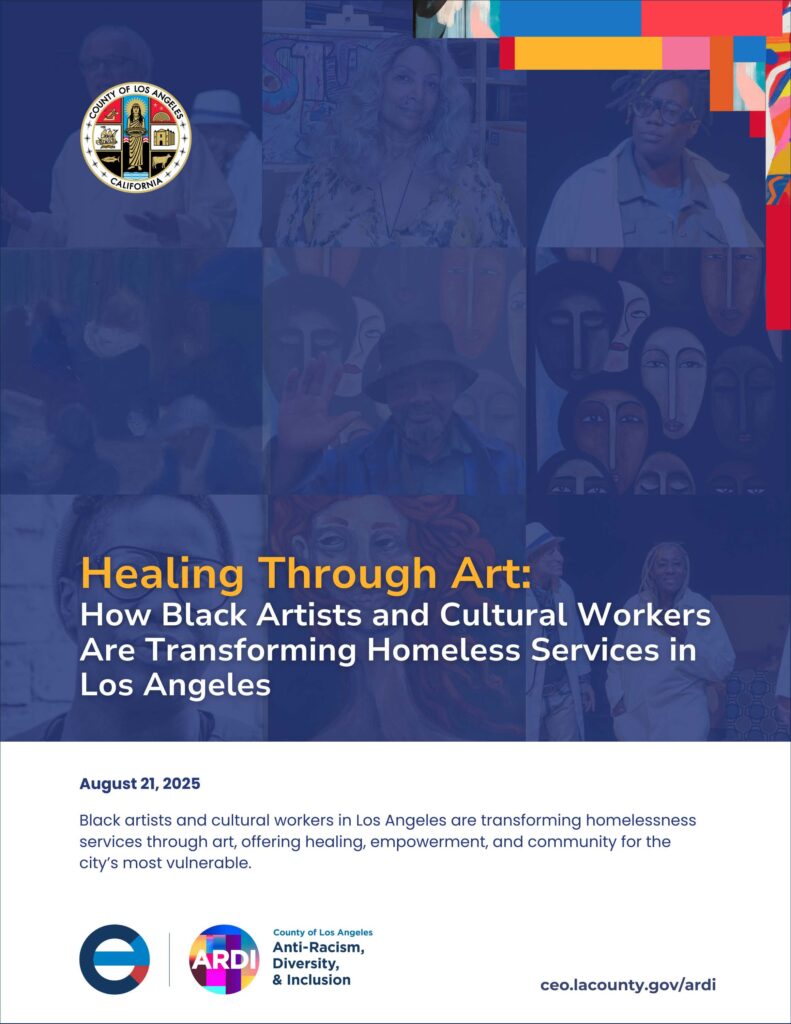
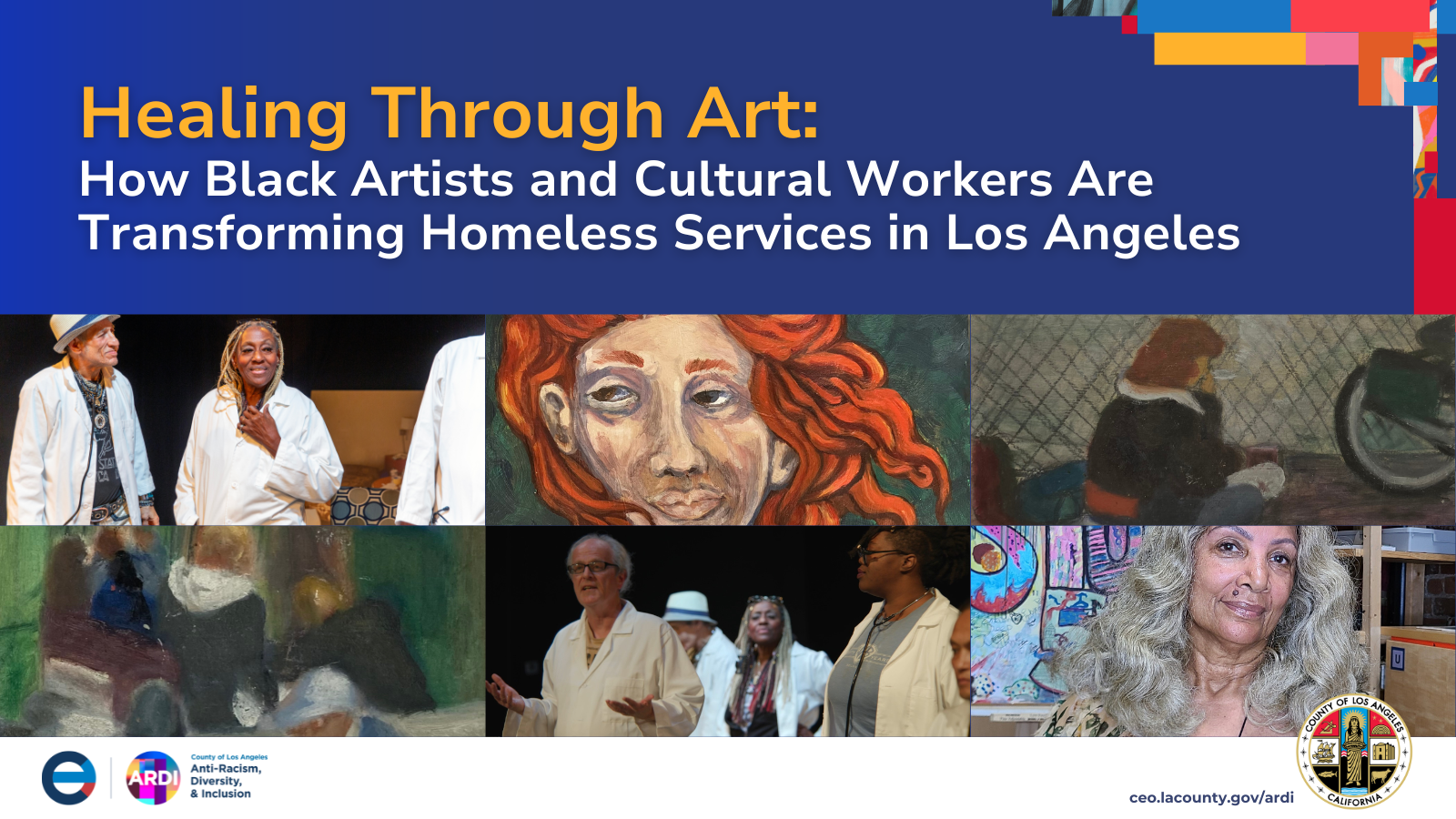
Healing Through Art: How Black Artists and Cultural Workers Are Transforming Homeless Services in Los Angeles
The Los Angeles County Anti-Racism, Diversity, and Inclusion (ARDI) Initiative’s Black People Experiencing Homelessness (BPEH) Implementation Steering Committee demonstrates how integrating Black artists and cultural workers into care teams creates transformative, culturally relevant interventions that address racial disparities in homelessness services.
Key Organizations and Programs
Los Angeles Poverty Department – Founded in 1985 as the first arts organization composed of unhoused individuals, this pioneering organization utilizes theater and art to amplify voices from Skid Row. Through performances, public art installations, and community-led storytelling projects, they have engaged over 900 Skid Row artists through their annual Festival for All Skid Row Artists since 2010. Their biennial Walk the Talk project honors community contributors, while their Skid Row History Museum & Archive reshapes narratives around poverty and advocates for equitable services.
The People Concern’s Studio 526 – Operating as a creative oasis in the heart of Skid Row, Studio 526 provides a fully equipped art space with painting, jewelry-making, ceramics, and music rooms. Guided by Housing First and harm reduction principles, this program serves as more than an art studio—it’s a space where individuals experiencing trauma, displacement, and isolation can reconnect with suppressed parts of themselves essential for healing.
Artist Testimonials and Impact
Leyla Martinez, a Cuban and Black dancer and performer, discovered the Los Angeles Poverty Department during her experience with homelessness. After traditional support services failed her, she found purpose through performance, stating “Performing is healing.” Her work in productions like “The Covid Hotel Welcomes You to the Future” highlights innovative healthcare approaches during the pandemic while emphasizing healthcare and housing as fundamental human rights.

Jaiye Kamson, Archive Assistant and artist at the Los Angeles Poverty Department, emphasizes art’s power as expression: “Having an avenue to express yourself safely and freely is so important when you’re on the street, because there’s really rarely any space for you to take up.” Her journey from experiencing homelessness to finding stability through mental health support and community connection demonstrates the comprehensive approach these programs provide.
Program Effectiveness and Community Impact
Both organizations operate on harm-reduction models, welcoming individuals regardless of sobriety or housing status. This inclusive approach builds trust and stability, with The People Concern achieving a 92% success rate in maintaining permanent housing among housed participants. Art serves as a bridge to resources and support, with performances drawing from community stories and fostering belonging.
The transformative impact extends beyond individual healing. One Studio 526 artist sold a painting for $5,000 and worked with The People Concern’s Money Management program to stretch the income over a year, illustrating how creative success translates to financial stability. Monthly Art Jams bring together music, poetry, and performance, creating spaces for connection, celebration, and sometimes grieving.
Systemic Change and Cultural Relevance
These programs align with ARDI’s mission to address systemic racism through culturally relevant interventions. By integrating arts and culture—whether through music, visual arts, dance, or theater—Black artists and cultural workers provide powerful outlets for processing trauma, expressing resilience, and reclaiming narratives. This creative expression bridges gaps between institutional care and the communities it serves.
Challenges and Future Vision
Despite proven success, funding for arts-based programs remains challenging. Both organizations rely on donations and volunteers to sustain their work. Future expansion requires increased corporate sponsorships, grant partnerships with cultural foundations, and community-driven fundraising efforts.
Conclusion
The integration of Black artists and cultural workers into homeless services represents a transformative approach that centers racial equity while addressing systemic disparities. By prioritizing the care of the most marginalized communities through culturally relevant artistic expression, these programs create pathways to healing, empowerment, and long-term recovery. As Alice Corona from The People Concern emphasizes, “Art is a human right. Everyone deserves access to creative spaces where they can heal, grow, and thrive.”
This model demonstrates that investing in the care of the most vulnerable through arts and culture fosters a more inclusive, connected, and compassionate society, ultimately benefiting all Angelenos.