
Overview
The American Rescue Plan, signed into law on March 2021, provides $350 billion in funding for state and local governments to build an equitable economic recovery from the devastating economic effects caused by the COVID-19 pandemic. The U.S. Department of the Treasury specifically states that the goal of these State and Local Fiscal Recovery Fund is to “promote and streamline the provision of assistance to individuals and communities in greatest need, particularly communities that have been historically disadvantaged and have experienced disproportionate impacts of the COVID-19 crisis.” The Treasury also identified the four main priorities for ARP funding:
-
-
- Focus on Equity: It requires recipients to track what portion of funds are going toward and benefiting highly impacted and disadvantaged communities.
- Focus on Workers: It supports basic public sector employees, essential personnel, and other workers in recognition that these workforces will drive America’s recovery and are largely from highly impacted communities.
- Focus on Community Engagement: It requires participants to report on community engagement strategies to inform spending and build capacity to serve people with significant barriers to services.
- Focus on Evidence Based Interventions: It requires recipients to track their project outcomes over time and some projects are required to provide information about what portion of their funds are spent on evidence-based interventions or are being evaluated.
-
Project Dashboard
The American Rescue Plan provides $1.9 billion in funding to LA County to build an equitable economic recovery from the devastating economic effects caused by the COVID-19 pandemic. You can view the approved programs, performance measures, and projected outcomes at LA County’s Dashboard below.
Recovering Better Than Before: Ensuring Equitable Implementation of the American Rescue Plan in LA County
Since January of 2020 when the first case of COVID-19 was identified in Los Angeles County (County), the COVID-19 pandemic has devastated the lives of many residents and disproportionately impacted low-income communities and communities of color. The Los Angeles County Board of Supervisors (BOS) recognized the immense opportunity afforded by the estimated $1.9 billion in funding from the American Rescue Plan (ARP) Act to address these inequities and transform the lives of millions of County residents.
On July 13, 2021, the Board of Supervisors (Board) adopted a motion to strategically use ARP funds to maximize benefits for communities suffering disproportionate health and economic impacts from the COVID-19 pandemic. The motion highlights the opportunity to transform the lives of millions of County residents by centering equity, reducing harm, and providing proportional resources to address the needs of our residents and communities.
The Board asked the Chief Executive Office, through the Anti-Racism, Diversity, and Inclusion Initiative to develop:
- Equity principles;
- A proposed formula that all departments must apply to ARP funding requests;
- A public-facing website with a dashboard that reports on the County’s ARP expenditures and outcomes by program and department;
- A public-facing dashboard identifying ARP contracting opportunities; and
- An implementation plan to accurately capture data for non-geographically concentrated communities disproportionally impacted by COVID-19.
The information contained in this website documents the results of these efforts. More information on the July 13, 2021 Board motion can be found here.
Spending Plan
The County received $1.9 billion under the American Rescue Plan. In addition, ARP funding has also been awarded to each of Los Angeles County’s 88 cities, for a grand total of more than $4.5 billion across all jurisdictions.
Housing and Homelessness
- More than $760 million for housing and related services for people experiencing homelessness, for services to prevent people from falling into homelessness, and affordable housing development.
Community Development
- More than $290 million in direct community investments and partnerships with community-based organizations.
Justice Diversion, Reentry, and Violence Prevention
- More than $123 million to expand the system of care and reduce reliance on incarceration; support justice-focused community organizations; create jobs for justice-involved individuals; and address trauma and violence in communities. This ARP funding includes $66.7 million for Care First, Jails Last programs, which will augment $100 million in additional County funding for Care First and Community Investments (also known as Measure J investments.)
Immigrant Services and Supports
- $20.5 million to support immigrants and immigrant-focused community-based organizations that provide a broad range of services, including legal representation, wealth-building assistance and organizational capacity building—in addition to a broad range of other ARP-funded assistance, from nutrition to childcare to health outreach, intended to benefit immigrant and other high-need communities.
Small Business and Entrepreneurship Supports
- $94 million for small businesses, entrepreneurs, and nonprofits hit hard by the pandemic.
A summary of the County’s ARP Phase One spending plan is here. A summary of Phase Two spending plan is available here. Learn more about the County’s spending plans here.

Implementing the Board’s Vision for ARP Funds
The CEO’s Anti-Racism, Diversity, and Inclusion (ARDI) Initiative team, in partnership with internal County Departments and external community partners has worked diligently to ensure the effective implementation of the American Rescue Plan Act of 2021 and our Board’s directives which prioritize communities most impacted by the pandemic. These efforts call for the targeting of resources to communities, especially communities of color, most impacted by the COVID-19 pandemic and most affected by poverty. To that end, the ARDI team has created guidance, resources, and a mapping tool to help County Departments comply with federal mandates and the Board’s vision, including:
- Countywide equity guiding and ARP-specific budget equity principles;
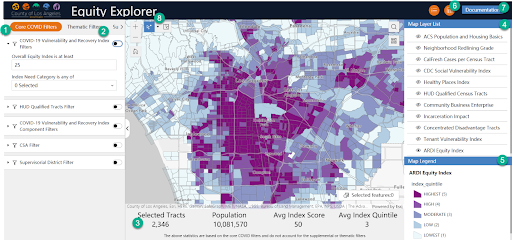
- A funding formula that targets funding in the highest need communities with a mapping tool to help identify those communities;
- Guidance on identifying non-geographically concentrated populations; and
- Automated project design and reporting forms with guidance documents.

Equity Guiding Principles
Reduce racial disparities in life outcomes as well as disparities in public investment to shape those outcomes.
Develop and implement strategies that identify, prioritize, and effectively support the most disadvantaged geographies and populations.
Authentically engage residents, organizations, and other community stakeholders to inform and determine interventions (e.g., policy and program) and investments.
Use data to effectively assess and communicate equity needs and support timely assessment of progress.
Disaggregate data and analysis within racial/ethnic and other demographic subgroup categories.
Work collaboratively and intentionally across departments as well as across leadership levels and decision-makers.
Act urgently and boldly to achieve tangible results.
Align policies, processes, practices to effectively address equity challenges throughout the County of Los Angeles’ workforce (personnel, contractors, and vendors).
Intervene early and emphasize long-term prevention.
ARP Budget Principles
Dedicate ARPA funds and resources to programs and services that reduce and close race and gender equity gaps and address root causes and drivers of inequity.
Lead with transparency and accountability during critical stages of program implementation by reporting out program process and seeking community input and engagement in delivering services.
Ensure immigrants of all statuses and system-impacted communities, including those with criminal histories, are eligible for any new or existing programs funded by ARPA dollars.
Ensure new and existing programs and services are accessible to disadvantaged communities without the fear of intimidation or judgment.
Services must be culturally and linguistically accessible, near transit, available in- person/over the phone, during days and hours when working individuals can access services and delivered by trusted messengers.
When possible, offer opportunities and the technical assistance needed to support CBOs in accessing County of Los Angeles funds. Leverage existing contracting reform strategies and third-party administrator programs.
Prior to the allocation of additional ARPA funding, assess the impact of the initial round of allocated ARPA funding and programs.
ARPA funds and resources should be used to support and uplift the health and wellness needs of communities who have experienced historic disinvestment, over-policing, and been impacted most by the pandemic. Funds should not be used to advance suppression-based efforts via incarceration and policing.
Intervene early and emphasize long-term prevention.
Funding Formula
The CEO’s Anti-Racism, Diversity, and Inclusion (ARDI) Initiative, in collaboration with the Coalition for Equitable ARP Implementation, considered numerous economic, social, environmental, and health factors to develop an allocation formula accounting for pandemic-related impacts upon the highest needs communities as well as the resources needed to meet the outcomes outlined in ARP. The adopted methodology ensures that ARP funding is prioritized for communities most impacted by COVID-19.
AMERICAN RESCUE PLAN – TARGETED ATTENTION FOR RESOURCES
Equitable Per-Capita Allocation
HIGHEST
(40%)
HIGH
(35%)
MODERATE
(20%)
LOW
(3%)
LOWEST
(2%)
Population by Need Category
For more information on the Funding Formula and the proposed COVID-19 Vulnerability and Recovery Index, please see the August 13, 2021 Report to the Board of Supervisors here.
Non-geographically Concentrated Population Strategies
There is a need to ensure that non-geographically concentrated communities disproportionately impacted by the COVID-19 pandemic are identified and prioritized within ARP allocations and projects. These communities include but are not limited to Native Hawaiian and Pacific Islander, American Indian and Alaska Native, and immigrant communities.
The strategies to identify non-geographically concentrated communities highly impacted by the COVID-19 pandemic include:
-
-
- The collection of data.
- Use of validated indicators.
- The adoption of recommended practices to improve County standards for collecting data and reporting.
-
The alternative methods for data mapping that will be adopted include:
-
-
- Conducting Public Participation Geographic Information Systems (PPGIS) analysis. PPGIS analysis is a technique for community- based participatory mapping used to capture data in collaboration with community leaders and other stakeholders; and
- Using provider and community experiences as qualitative data points to supplement quantitative indicators (i.e., mixed-method strategies) to inform programming investments. The County could gain insights from its COVID-19 Community Equity Fund providers which predominantly serve the identified communities.
-
In addition, targeted outreach and engagement strategies to reach these communities will be achieved by:
-
-
- Leveraging community-based organizations and internal County programs that predominantly serve hard-to-count populations to identify and reach them in the communities in which they live. Partnering with trusted messengers is particularly crucial for immigrant communities who may experience heightened fears of government institutions or violating public charge rules; and
- Building in robust and targeted outreach and engagement services in funded programs and aligning these efforts in departmental community engagement plans.
-
For more information on these data strategies and the implementation plan, please see the August 26, 2021 Report to the Board of Supervisors here.
Language Access for ARP-Funded Programs
The Los Angeles County Office of Immigrant Affairs in the Department of Consumer and Business Affairs, is working to improve the County’s ability to serve Language Other Than English (LOTE) speakers by increasing access to and centralizing language services for ARP-funded programs, grants, and contract opportunities. Current efforts include:
- Launching Language.LACounty.gov, a centralized online language service hub;
- Increasing County workforce capacity to serve language diverse communities; and
- Securing subcontracted language interpretation services to increase access to ARP-funded resources.
Centralized Language Services Hub
The Los Angeles County Office of Immigrant Affairs (OIA) in the Department of Consumer and Business Affairs, is collaborating with U.S. Digital Response (USDR) on the Language.LACounty.gov online language services hub. The site will feature:
- An overview of the Countywide Language Access Initiative;
- A language access complaint form to track complaints, quickly respond, and improve language services;
- A language identifier tool that connects users with information about County benefits, services and resources; and
- A language mapping tool that allows users to visualize areas in the County with high concentration of LOTE speakers via a data-driven geographic information system (GIS) platform.
The visual design and content for the language hub website was finalized and is expected to launch later this year.
Additionally, OIA is using insights from the research conducted to develop the centralized language services hub to develop website accessibility design principles to help County departments improve website language access and disability accommodations. Currently, there are more than 160 websites across the County, which could apply a more uniform approach to ensuring accessibility.
Language Updates to the Equity Explorer
Comunidades Indígenas en liderazgo (CIELO) provided County data on indigenous language concentrations in the County, which was incorporated into the “L.A. County Linguistic Diversity” map. It can also be found as a drop-down menu in the Los Angeles County Equity Explorer under “Language Communities” as “Indigenous Languages Survey.” CIELO is now finalizing a training video that will teach County departments how to use this data to conduct demographic analysis for language access planning purposes. The video will also provide guidance on how to identify which indigenous languages a person might speak.
Workforce Training
OIA is also developing strategies to better serve diverse language communities and increase their awareness of, and access to, ARP-funded programs. They developed a training video on “Serving Indigenous Migrants” in collaboration with CIELO and are working with PALS for Health to finalize a video-based, modular training on the “Basics of Interpretation” to support multilingual staff who can provide interpretation services. The training series will focus on the role of the interpreter, as well as ethics, standards, and strategies for effective interpretation. Forthcoming training videos developed in collaboration with other community partners include “Serving the Deaf and Hard-of-Hearing Community” and “Serving South Asians.”
Community Interpreter Pilot
OIA completed its first Community Interpreter pilot training in October 2024 to expand its pool of community-based interpretation providers. The cohort of participants represented 13 organizations that now have the opportunity to contract with the County as on-call interpreters. Most of the participants were Spanish speakers. Below is a program review from a participant:
“I was the only English-Chinese Mandarin / Cantonese / Toishanese trainee in this cohort but never felt left out in the classroom. [The coaches] offered support during the practice sessions…and my interpretation skills and medical terminology have greatly enhanced. I am [now] more confident when serving my community as an interpreter.”
OIA collaborates with ISD to develop pathways for certified interpreters to become County vendors for contract work. This may require expanding the existing language services master agreement administered by ISD to allow the procurement of specialized, single-language interpreters or developing a new contract vehicle.
The second and final training cohort launched on March 26, 2025, after receiving nearly three times the number of applications that funded training slots. This cohort focused on recruiting more linguistically diverse community-based participants, and includes 23 speakers representing Amharic, Cantonese, Hindi, Khmer, Korean, Mandarin, and Samoan languages.
Language Access to ARP-Funded Program Highlight: CBOs Financial Wellbeing & Wealth Building
The County increased language access to ARP-funded programs provided by the Department of Consumer and Business Affairs, including Grants to CBOs Focused on Financial Wellbeing & Wealth Building in Low-Income Communities of Color and Financial Coaching Partnership. These programs delivered financial planning and coaching services.
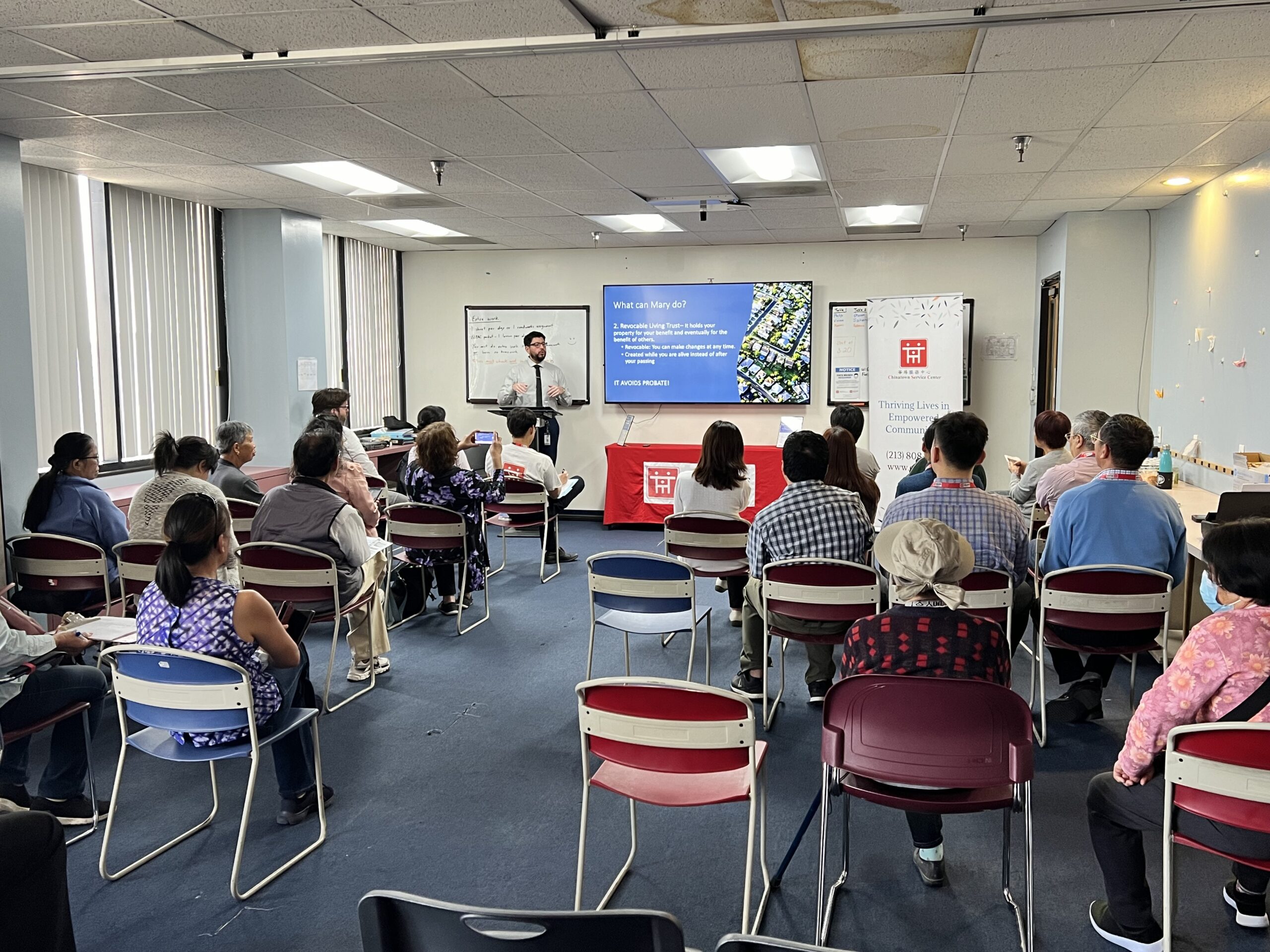
The Financial Wellbeing and Wealth Building program provided grants to community-based organizations and community development financial institutions to support low-income communities with intergenerational wealth-building, financial coaching, and homeownership. To increase language access to these services, the County subcontracted with language service providers to translate general information regarding estate planning products and power of attorney. The providers also directly supported LOTE clients in completing applications to receive free estate planning legal services. The program has since ended.
Below is a comment from a participant about the program:
“I was unaware of the benefits of wills and trusts before this [program]. As an immigrant who is just settling down in the USA, I never thought my wealth is enough for estate planning. This eye-opening session has encouraged me to talk with my husband and family about the learnings and benefits, so we can secure our child’s future.”
The Financial Coaching program provided free financial coaching to community members impacted by the economic fallout from the pandemic. Services will be provided in multiple languages, while CBO partners plan to conduct program outreach in Chinese, Hindi, Bengali, Gujarati, Nepalese, and other South Asian languages. Visit: LA Financial Planning – FORWARD Platform for more information. The program has since ended.
Introducing The COVID Vulnerability and Recovery Index
Due to the health, social, and economic circumstances experienced by economically vulnerable communities of color, many of which pre-dated and were exacerbated by the pandemic, COVID-19 infection patterns demonstrated a shift in the spread of COVID-19 from wealthier, predominantly White communities towards non-White, low-income communities early in the pandemic.
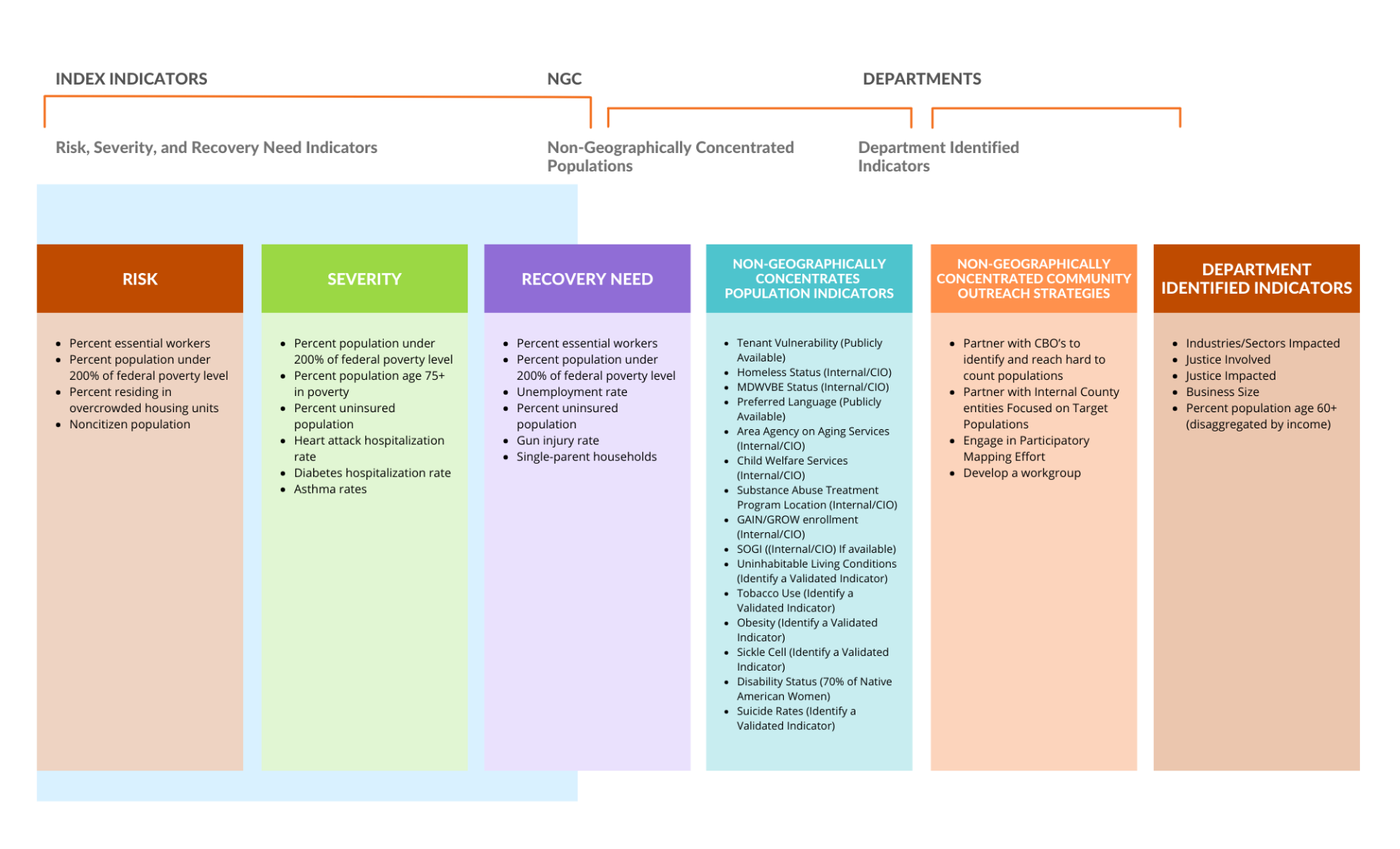
The County of Los Angeles has partnered with Advancement Project California to adapt its initial statewide index to develop the COVID-19 Vulnerability and Recovery Index (Index) that identifies the communities most disproportionately impacted by COVID-19 and at greater risk of adverse outcomes. The Index includes COVID-19-related risk, severity, and recovery need indicators that stratifies County cities and communities into five need tiers, ranging from highest to lowest need.
The COVID-19 Vulnerability and Recovery Index uses census data to identify communities most in need of pandemic and economic relief interventions using indicators that assess risk factors for COVID-19 infection, vulnerability to severe outcomes if infected, and ability to recover from the health, economic, and social impacts of the pandemic.
To learn more about the COVID-19 Vulnerability and Recovery Indicators and the different approaches taken to assess communities, click here.